
Loading...
McAllen Sunrooms & Patios installs screen rooms, patio enclosures, and sunroom additions for Palmview homeowners - every project designed for the Valley's intense heat, year-round humidity, and the stucco and masonry homes that make up most of Palmview's residential neighborhoods. We handle permits, inspections, and all follow-up, and we reply to every inquiry within one business day.
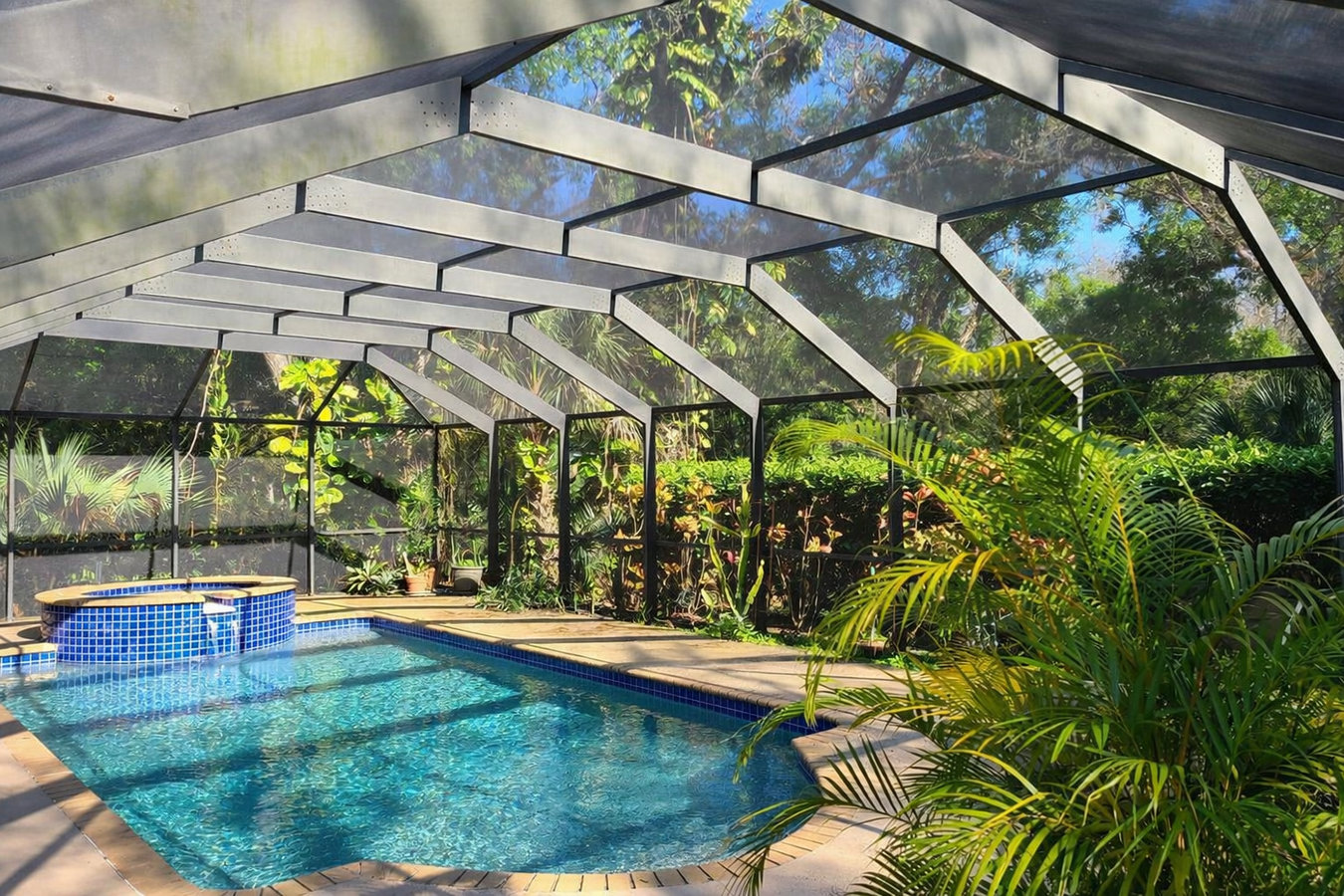
Palmview's proximity to the Rio Grande and the moisture that comes with it means mosquitoes are a real obstacle to outdoor living for much of the year. A solar screen room blocks insects, filters afternoon UV, and creates usable outdoor space that Palmview families can actually enjoy during the cooler morning and evening hours even in the hottest months.
Many Palmview homes from the 1970s through the 1990s were built with concrete slab patios or carports that have never been enclosed. Converting one of those slabs into a screened or glass-panel enclosure adds practical living space without a full room addition, and it takes advantage of existing concrete that the homeowner has already maintained for years.
The compact single-family homes that dominate Palmview's residential neighborhoods were not built with generous square footage in mind. A sunroom addition off the back of the house adds natural-light-filled living space at a lower cost per square foot than a conventional room addition, without requiring changes to the interior layout or roofline.
Palmview gets occasional hard freezes - the February 2021 storm hit the entire Rio Grande Valley - and summer temperatures routinely exceed 100 degrees. A four season sunroom with low-e insulated glass and a connected HVAC system is the only type of glass-walled room that remains comfortable through both extremes and stays usable year-round in this climate.
Palmview's year-round humidity and intense UV exposure are hard on framing materials that require painting or have exposed metal components. Vinyl framing does not corrode, does not need repainting, and holds its dimensional stability through the temperature swings between summer heat and the rare winter freeze, making it a practical long-term choice for homeowners in this part of the Valley.
Flat lots with limited natural shade are the norm in Palmview, which means unshaded concrete patios absorb full sun from mid-morning through late afternoon in summer. An insulated aluminum patio cover with proper drainage pitch solves that problem and adds protection against the wind-driven rain that comes with the Valley's summer storm season.
Palmview sits on the flat coastal plain just west of McAllen, where the Rio Grande bends south toward the Gulf. Most of the city's homes were built between the 1970s and the 1990s - a period when stucco and concrete block construction was standard throughout the Rio Grande Valley. That building tradition produces durable homes, but stucco exteriors do crack over time as the structure responds to temperature swings and the clay soil movement that is common across the region. Any sunroom or enclosure attached to a Palmview home needs to work with that construction - proper attachment into the masonry, sealed penetrations, and a frame that accounts for the wall's existing thermal movement.
The flat terrain that defines Palmview creates a drainage challenge that affects every outdoor project. Lots with minimal slope do not shed water quickly, and poorly designed additions or enclosures can redirect runoff toward the foundation instead of away from it. The USDA soil data for this area, available through the USDA Web Soil Survey, confirms the heavy clay composition under most Palmview lots. A contractor who understands this grades the new slab or patio surface to move water away from the structure, not toward it - and checks that the existing slab drains correctly before attaching anything to it.
Our crew works throughout Palmview regularly, and we understand the local conditions that affect sunroom and screen room work here. The older neighborhoods closer to the city center - compact lots with homes built in the 1970s and 1980s - are where we most often encounter stucco exteriors that have been patched and repainted multiple times, and slabs that have developed the slow drainage slope that is common on flat Valley lots after decades of soil movement. We assess both before we spec any project, because they affect how the new structure attaches and how the long-term water management will work. The City of Palmview handles building permits for work within city limits, and we are familiar with the local plan review requirements.
Palmview is a small city - around 16,000 to 17,000 residents - sitting directly west of McAllen along the Rio Grande corridor. Most residents work or shop in McAllen, and daily life flows naturally between the two cities. The Anzalduas International Bridge connects Palmview and Mission to the Mexican side of the border, and Anzalduas County Park along the river is a well-known local landmark. Newer subdivisions on Palmview's north and west edges have homes from the 2000s and 2010s, while the older core of the city contains the more compact, stucco-clad homes that make up the bulk of the housing stock.
We serve all of Palmview and the surrounding communities. Homeowners in Hidalgo, just east of Palmview along the Rio Grande, deal with similar flat-lot drainage conditions and the same masonry building tradition. We also work regularly in Mission, which shares a border with Palmview to the north and has a comparable mix of older and newer homes across its neighborhoods.
Call us directly or submit your information through our contact form. We respond to every Palmview inquiry within one business day and can usually schedule a site visit within the same week.
We visit your Palmview property to measure, assess the slab condition, and review the wall attachment points. You receive a written, itemized estimate before any work is scheduled - with line items for foundation, framing, glazing, and any HVAC or electrical scope, so you know exactly what you are committing to.
We submit the permit application to the City of Palmview and manage all city correspondence and inspection scheduling. Construction begins once the permit is issued - you do not need to chase down approvals or track inspection dates on your own.
After the final city inspection passes, we walk the project with you to answer questions about the structure, glazing, drainage, or any HVAC components. You keep all permit and inspection documentation for your records.
We serve all of Palmview and the surrounding Rio Grande Valley communities. Every estimate request gets a response within one business day - no pressure, no vague numbers.
(956) 899-5743Palmview is a small city of roughly 16,000 to 17,000 residents in Hidalgo County, sitting along the Rio Grande just west of McAllen. The city developed rapidly in the second half of the 20th century, and most of its housing stock dates from the 1970s through the 1990s - single-family homes with stucco or concrete block construction on modest lots. The older neighborhoods closer to the city center are more compact, while newer subdivisions on the north and west edges of town feature homes from the 2000s and 2010s. The community is served by La Joya Independent School District, and most residents have daily ties to McAllen for work, shopping, and services.
The city is defined by its position along the Rio Grande - the Anzalduas International Bridge and Anzalduas County Park are local landmarks just minutes from most Palmview neighborhoods. The flat terrain and proximity to the river give the area a character that is distinct from the more urban feeling of central McAllen, and many Palmview families have lived here for multiple generations. Homeowners in neighboring Weslaco to the east share many of the same housing conditions and climate demands, and we work throughout that community as well. We also serve McAllen, Palmview's larger neighbor to the east, regularly.
Call us or send a message and we will respond within one business day with honest information about what your Palmview project will take and what it will cost.